Installation
Hot tub electrical requirements in Mallorca: amps, lines, boletín
Dedicated line, RCD, amps by collection, which Hot Spring models plug in, contracted power and whether to raise it, three-phase villas, cable runs, the electrician's certificate and what our installers check on the first visit.
Of everything involved in putting a hot tub on a terrace in Mallorca, the electrics are the part you cannot improvise. The power supply has to be right before the water goes in, and in older fincas and apartments it is the most common reason an installation date slips. This guide sets out the hot tub electrical requirements for the Hot Spring range: which collections plug in and which need a dedicated line, how contracted power affects you, what three-phase changes, and what our installers look at on the first visit.
A dedicated line, nothing shared
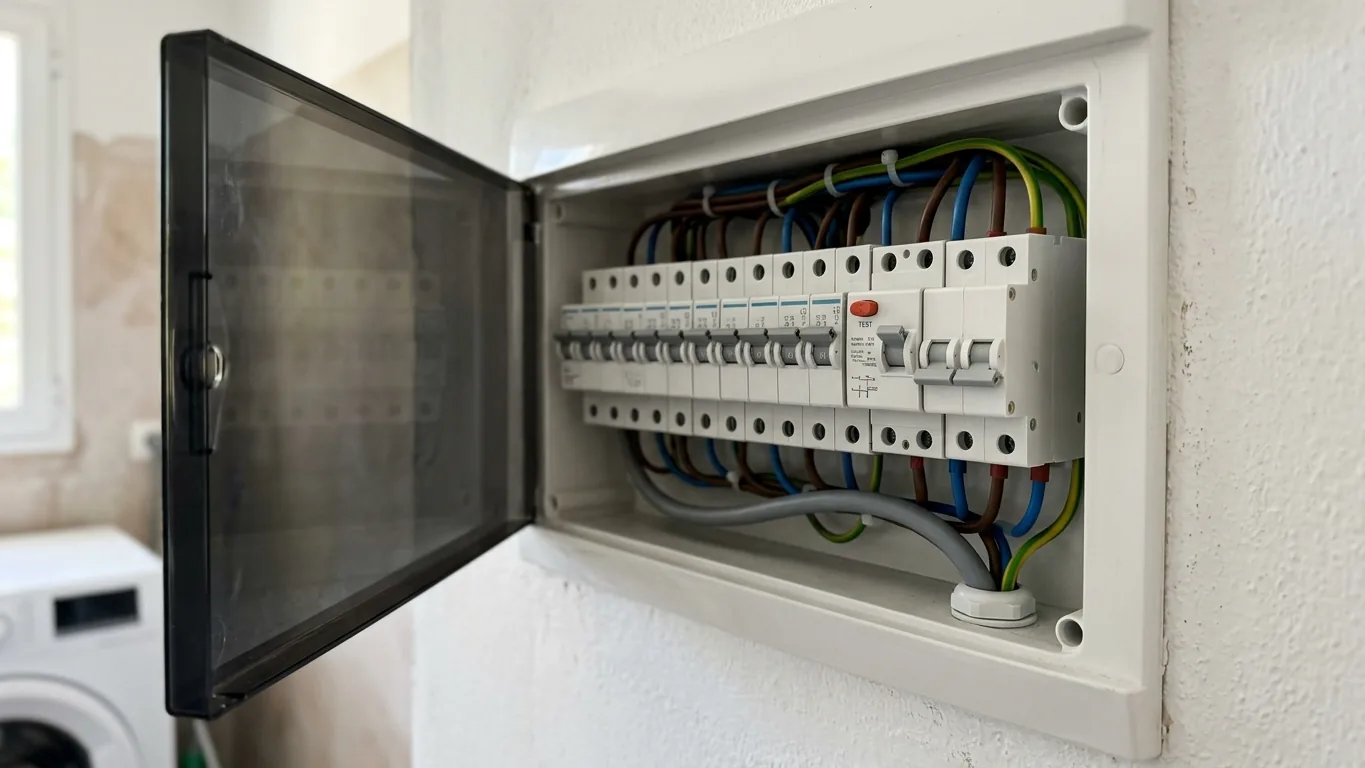
Every hard-wired hot tub needs its own circuit from the main consumer unit (the cuadro eléctrico):
- Its own circuit breaker, sized for the model.
- Its own 30 mA residual current device (RCD, in Spanish a diferencial), separate from the one that protects the house.
- A hard-wired connection into the tub's control box, with a weatherproof isolator near the tub so it can be switched off without going indoors.
A tub cannot share a circuit with the kitchen, the pool pump or the air conditioning. Shared circuits trip at the worst moment, usually when the heater and the oven run together on a December evening.
Hot tub power supply by collection
All Hot Spring models run on 230 V single-phase. The rating each one needs for its breaker and cable:
- Freeflow (Mini, Azure, Excursion, Aptos, Monterey): a 230 V standard socket on a 16 A circuit, with a 2 kW heater and one pump. These are the plug-in models of the range.
- Hot Spot (TX, SX, Stride, Propel, Relay, Rhythm): a dedicated 16 A line with RCD and a 1.5 kW heater. The Stride and SX have one pump, the Relay and Rhythm two.
- Limelight: Strobe, Beam, Flair, Flair DL and Flash on a dedicated 16 A line; the Pulse on 20 A; the Prism, with three pumps, on 25 A.
- Highlife: Jetsetter, Jetsetter LX, Prodigy and Sovereign on a dedicated 16 A line; Aria, Vanguard, Envoy and Grandee on 20 A.
- Vigor cold plunge: its own line with RCD, like the hot tubs.
These are breaker ratings, not continuous draw. The control system manages the load so the heater gives way when the jet pumps run at high speed, and for most of the day the tub draws very little. The hot tub electrics in Mallorca homes therefore rarely need the heavy supplies people expect: a 16 A line covers most of the range, and nothing needs more than 25 A.
Contracted power and three-phase
In Spain every household chooses and pays for a maximum power, the potencia contratada, printed in kW on each bill. Draw more than that at any moment and the limiter in the smart meter cuts the whole house. Common values are 3.45, 4.6, 5.75 and 6.9 kW for flats and village houses. Villas with air conditioning and a pool pump are often on 9.2 or 10.35 kW, and larger properties on three-phase have more.
The question is not whether the tub fits within the contract on its own. It is whether the tub plus everything else that runs at the same time fits. A 16 A circuit can carry up to about 3.7 kW, a 20 A circuit about 4.6 kW and a 25 A circuit about 5.75 kW, although the tub only approaches those figures briefly, when heater and pumps overlap. In practice:
- On a 5.75 kW contract with an induction hob and a split air conditioner running, a tub on a 16 A line is tight but usually workable with a little scheduling.
- On 6.9 kW most of the range is comfortable.
- For the 20 A and 25 A models in a house that cooks on electricity, we usually suggest 9.2 kW.
Raising the contracted power is done through your electricity retailer. Up to the limit your existing certificate allows, it is a remote change on the smart meter, usually within a week, and the increase shows on the fixed part of the bill. Going beyond the certificate needs a new one from an electrician, which is sensible to combine with the new line for the tub.
Many fincas and larger villas already have a three-phase (trifásica) supply, installed years ago for a well pump or heavy air conditioning. Hot tubs are single-phase appliances, so the electrician connects the tub to the phase carrying the least load and the house stays balanced. Three-phase is an advantage rather than a problem: a Grandee on 20 A on one phase leaves the other two for the kitchen and the air conditioning.
Cable runs and distance
Distance from the consumer unit to the tub decides the cable size. A 16 A circuit over a short run needs 2.5 to 4 mm² cable; 20 A over 20 m usually 6 mm²; 25 A over a long run 10 mm². Longer runs need thicker cable to limit voltage drop, so the electrical work grows with the distance rather than with the model. The cable runs in rigid conduit on a wall or buried in a trench in the garden.
Longer routes, a sub-board in an outbuilding or a trench across a paved courtyard are quoted after the visit. The contract increase is paid to your retailer, not to us.
Freeflow and the socket question
The Freeflow collection plugs in, and that raises an obvious question: can it go into the garden socket? No. Spanish wiring regulations treat the area around a spa like a pool zone. Within it there are no ordinary sockets, and anything electrical has to be protected and rated for wet conditions. For an Aptos or a Monterey the electrician fits a dedicated 16 A circuit with its own RCD and a weatherproof socket outside the splash zone, so the tub is the only thing on that circuit. Extension leads from the house are out of the question, as are mains-voltage garden lights or speakers within reach of the water. Low-voltage lighting around the tub is fine and looks better anyway.
The certificate: the boletín
For a new dedicated circuit the electrician issues a Certificado de Instalación Eléctrica, which everyone on the island still calls the boletín. It records the circuit, the protection and the test results, and it is registered with the regional industry department. You need it to raise the contracted power beyond the old certificate, and your insurer may ask for it after any incident on the terrace. An installer who offers to connect a tub without one is the wrong installer.
Running the heater on Mallorca electricity
Because the supply is modest, the running cost is driven by insulation and habits rather than by the wiring. On the site's own model of three sessions a week at 38 C and 0.12 EUR per kWh, a Stride uses around 100 kWh a month in summer and 191 kWh in winter, roughly 12 EUR and 23 EUR of electricity per month. An Aria with its multiple layers of urethane foam comes in at about 96 kWh and 182 kWh, around 11 EUR and 22 EUR per month. A Monterey without that insulation sits higher, at about 123 kWh and 241 kWh, around 15 EUR and 29 EUR per month.
What our installers check on the visit
The electrical part of the site visit comes down to a short list:
- The consumer unit. Condition, spare ways, and whether the main switch and RCDs are modern. In fincas from the 1970s and 1980s the board is often the first thing that needs attention.
- The bill. The potencia contratada and whether the supply is single or three-phase, both printed on it.
- The route. How far the tub site is from the board, and whether the cable can go through a wall, along a facade or needs a trench.
- The earth. Older rural properties sometimes have a poor or missing earth. A tub with a weak earth is not safe and the RCD will not behave correctly.
- Solar and generators. Inverters and generators change how the circuit is protected and how the tub should be scheduled.
- The isolator or socket position. Visible from the tub, reachable, out of the splash zone.
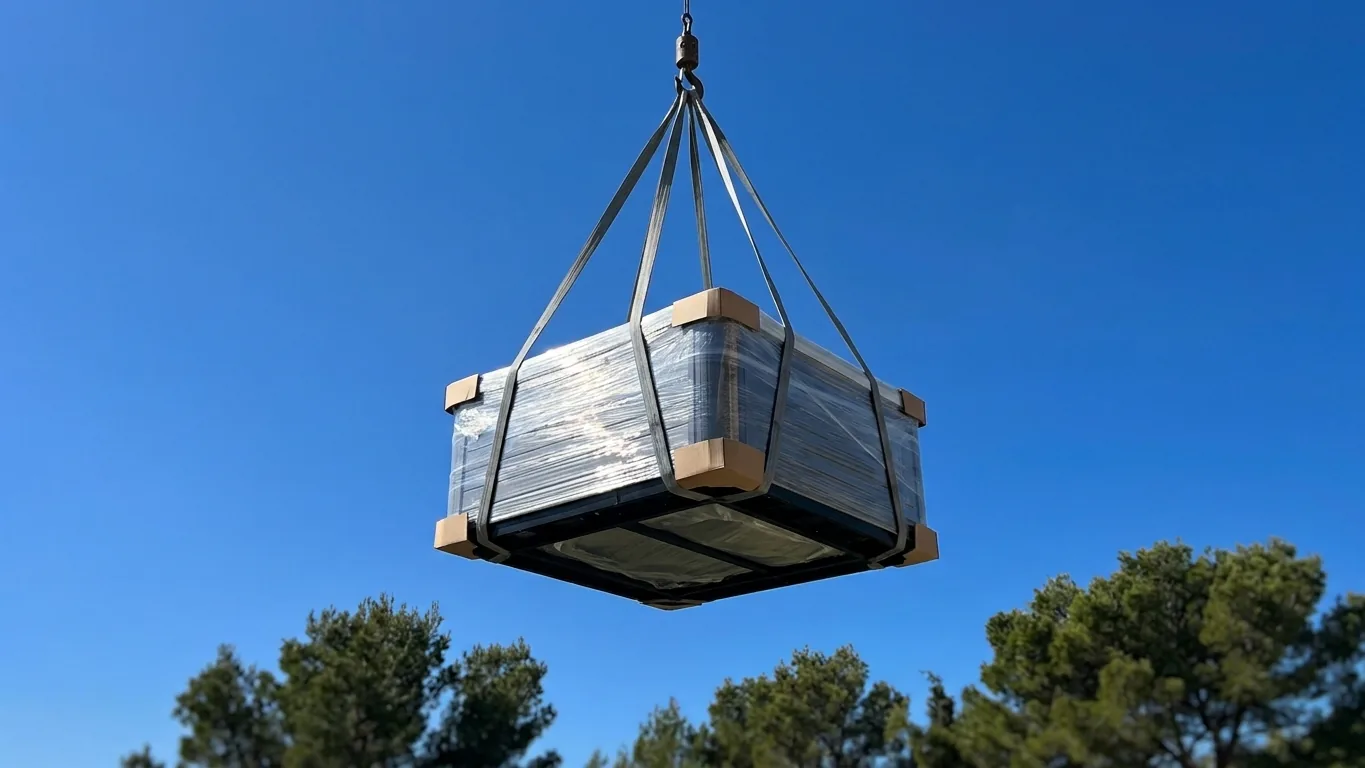
Send a photo of the open consumer unit and a recent bill before the visit and most of this is answered in advance. Our swim spas are coming soon, and they are electrical projects first: in many Mallorca homes a swim spa means raising the contract or moving to three-phase. The sequence that avoids delays is to check the supply, adjust the contract, run and certify the line, and only then book the crane.
Next step
Electrics are the one part of a hot tub installation where cutting corners is both unsafe and false economy. Check your potencia contratada before you order, expect a dedicated line for anything above the Freeflow collection, and treat a swim spa as a power upgrade with a pool attached. The spa planner on this site shows the supply each model needs next to its size and weight, and a photo of your cuadro on WhatsApp tells us most of what we need before anyone visits. Then ask us for your price.